Keep useful context.Make the instructions reusable.
Retain supported working context and supply skills that describe how you want a job done. Review both as your practice changes, while keeping records, instructions and account access distinct.

Task instructions
Consultation brief
Client needs. Known facts. Open questions. Next step.
- Current record
- Olivia Reed
- Priority
- Home office
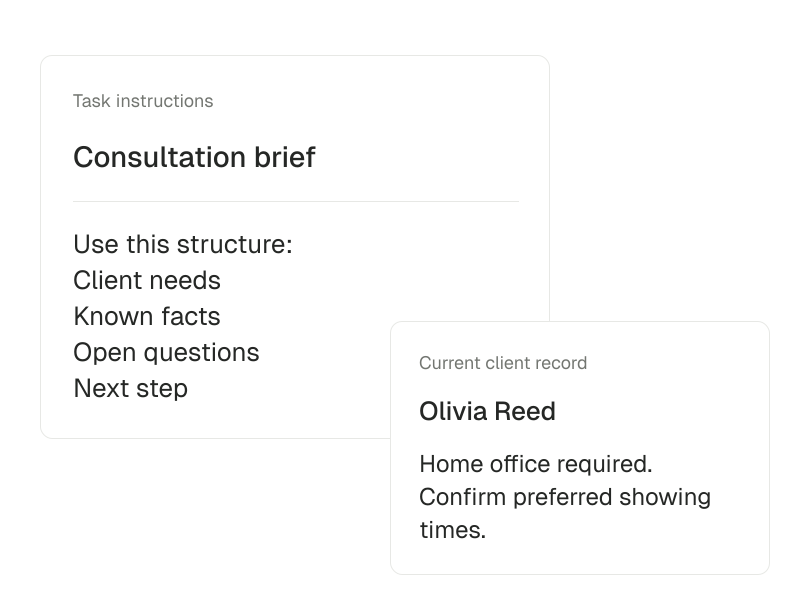
A consistent way to prepare client notes.
A useful instruction can describe the structure of a consultation brief: client needs, known facts, open questions and the next step. The current client record remains the source for the facts.
- 01
Write the working method
Describe the format, the source material to consult and the checks the task needs. Keep preferences separate from facts about a particular client.
- 02
Use context within its scope
Retained context belongs to its supported workspace. Bring current records and source files into the task rather than assuming memory contains every update.
- 03
Review instructions when the work changes
Correct outdated preferences, changed procedures and missing context before relying on them again. Installed tools and authorized connections still determine what an agent can do.
Inside memory & skills.
- Retain useful context
- Retain working instructions and supported memory so the next task can start with context.
Memory belongs to its supported workspace scope and can need review.
- Supply skills and instructions
- Add skills and installed tools that describe how you like a particular job done.
Instructions do not grant new account access or blanket action permission.
Questions about Memory & skills.
Does memory replace the client or property record?
No. Retained context can help an agent start with useful instructions, while the current record and source files remain the facts to check.
Does installing a skill authorize actions?
No. A skill supplies instructions. It does not grant account access or blanket permission to send, publish or change records.